



SaaS Development Services
Scale Your Business With Saas Development Services
Build Secure, reliable, scalable SaaS platforms around your business model, users, and workflows with 20+ years of experience, AI expertise, integrations, user-centred design, and continuous optimisation.
- 20+ Years of Experience
- 8,000+ Projects
- 4,100+ Clients
- 350+ Experts
Our Technology Partners
Built on Trusted Technology Platforms
We work across leading cloud, CRM, and AI platforms, so every recommendation is based on what fits your business, not a single vendor.






Overview
Why Businesses Invest in SaaS Development
Businesses invest in SaaS to support growth, simplify software delivery, improve operational efficiency, enable self-service access, and continuously adapt products to changing customer needs.
Software That Scales
SaaS helps businesses manage growing users, transactions, and workloads with software that can evolve without constant deployment, maintenance, or architectural rework.
Centralised SaaS Delivery
Centralised SaaS delivery enables continuous updates, easier accessibility, self-service capabilities, connected workflows, and consistent product improvements across growing customer bases.
Built Around Your Business
Custom SaaS development aligns software with your business model, users, workflows, and growth requirements while helping overcome limitations of legacy platforms.
Scalable Foundations
What Makes a SaaS Product Scalable and Sustainable?
A scalable SaaS product needs strong technical foundations, including multi-tenancy, cloud infrastructure, scalable architecture, security, integrations, monitoring, and flexibility for future growth.
Scalable SaaS Foundations
Multi-Tenant Architecture
Structure your platform to support multiple customers, users, tenants, and access requirements as the SaaS product grows.
Cloud-Native Infrastructure
Build an infrastructure foundation that can accommodate changing workloads, product requirements, deployment needs, and future growth.
Performance & Availability
Consider performance and availability from the architecture stage rather than treating them as problems to solve after growth.
Scalable Data & Backend
Design databases and backend architecture around increasing users, workloads, transactions, integrations, and product functionality.
Security & Role-Based Access
Build appropriate access structures around users, roles, permissions, platform requirements, and the security needs of your SaaS environment.
APIs & Integrations
Plan API access and third-party integrations early so your platform can connect effectively with the systems your users and business depend on.
Subscription & Billing
Account for subscription structures and billing requirements as part of the product architecture rather than adding monetisation later.
Analytics & Monitoring
Use product analytics and usage monitoring to understand how the platform performs and how customers interact with its capabilities.
Flexible Architecture
Keep the architecture adaptable enough to support future product features without requiring constant architectural rework.
Backup & Recovery
Consider backup, monitoring, and disaster recovery requirements as part of responsible SaaS architecture and product planning.
Product Planning
Plan the Right SaaS Product Before Development
Validate your product scope, users, architecture, integrations, security, and roadmap early to reduce rework and create a clearer path toward scalable SaaS development.
Business Model & Subscription Structure
Define how the product will be packaged, accessed, and monetised before technical decisions lock in unnecessary complexity.
Target Users & Roles
Clarify who will use the platform, what they need, and which permissions or workflows different users require.
MVP Scope & Priorities
Identify the functionality needed to establish the product while separating immediate priorities from future capabilities.
Multi-Tenancy Requirements
Determine how customers, users, data, access, and tenant structures need to operate within the platform.
Data & Integrations
Identify the information and external systems the SaaS product needs to exchange, process, manage, or expose.
Architecture & Technology
Evaluate technical architecture and technology requirements according to product functionality, scalability expectations, integrations, and future development needs.
Security & Compliance
Define relevant security and compliance requirements early so they can inform product architecture and engineering decisions.
Product Roadmap
Establish a practical path from initial product scope toward future capabilities, improvements, integrations, and scaling requirements.
Build vs. Integrate
Determine which capabilities should be developed internally and which can be supported through appropriate third-party integrations.
Our Services
Our SaaS Development Services
Wildnet Edge helps businesses turn SaaS ideas into scalable products and modernise existing platforms through product engineering, architecture, UX/UI, AI capabilities, cloud infrastructure, and ongoing optimisation. The approach connects technical execution with practical product and business requirements.

Custom SaaS Development
Business Challenge: You need software built around specific users, workflows, business rules, and product requirements.
SaaS Solution: We develop custom SaaS platforms around those requirements, including product functionality, architecture, integrations, and user experiences.
Business Outcome: You get a product aligned with how your organisation operates rather than adapting your business around generic software.

SaaS Product Development
Business Challenge: Turning an idea or MVP into a usable SaaS product requires product thinking alongside engineering execution.
SaaS Solution: We connect product requirements, UX/UI, engineering, integrations, testing, deployment, and ongoing optimisation throughout development.
Business Outcome: Your product gains a clearer path from initial functionality toward a sustainable platform that can evolve with customer needs.

SaaS Architecture & Engineering
Business Challenge: Growth can expose architectural limitations across infrastructure, databases, backend systems, integrations, and product functionality.
SaaS Solution: We design and engineer SaaS architecture around scalability, multi-tenancy, performance, security, integrations, and future product requirements.
Business Outcome: Your platform has technical foundations designed to support growth without relying on constant architectural rework.

SaaS UX/UI Design
Business Challenge: Complex SaaS products can create friction when users struggle to understand workflows, features, dashboards, or account functionality.
SaaS Solution: We design user-centred SaaS experiences around user roles, workflows, product functionality, and practical usability requirements.
Business Outcome: Customers get clearer product experiences while administrators and internal teams can manage the platform more effectively.

AI-Powered SaaS Solutions
Business Challenge: Existing SaaS workflows may contain opportunities for better automation, personalisation, search, analysis, or customer support.
SaaS Solution: We integrate AI capabilities such as intelligent search, recommendations, predictive analytics, assistants, reporting, and workflow automation into SaaS products.
Business Outcome: AI becomes part of useful product functionality rather than a disconnected technology layer.

SaaS Modernisation & Scaling
Business Challenge: Existing SaaS products may face legacy architecture, performance limitations, infrastructure challenges, or outdated user experiences.
SaaS Solution: We modernise architecture, APIs, databases, infrastructure, UI/UX, monitoring, and other platform components incrementally.
Business Outcome: Businesses can improve reliability, maintainability, scalability, and user experience without automatically rebuilding the entire product.
Product Features
SaaS Product Features That Support Adoption and Growth
A SaaS product needs user-focused features that simplify onboarding, account management, administration, automation, integrations, and visibility while reducing support dependency.
User Registration & Onboarding
Create a clearer starting experience that helps customers register, understand the platform, and begin using relevant functionality.
Self-Service Account Management
Give users greater control over accounts and routine actions without creating unnecessary dependency on internal support teams.
Role-Based Access & Permissions
Structure access around different user responsibilities so customers, administrators, and internal users see appropriate capabilities.
Multi-Tenant User Management
Manage users and tenant relationships in a way that supports the operational structure of the SaaS platform.
Subscription & Billing Management
Support subscription structures and billing requirements within the product experience rather than relying entirely on manual processes.
Dashboards & Analytics
Give users and administrators clearer visibility into relevant information, activity, performance, and product usage.
Search & Filtering
Help users find relevant information efficiently as product data, records, customers, and platform content increase.
Notifications & Communication
Support timely product communication through notifications and relevant customer or internal messaging workflows.
Workflow Automation
Reduce repetitive operational work by connecting recurring actions into defined product workflows.
Third-Party Integrations
Connect the SaaS platform with external systems customers and businesses already rely on.
API Access
Enable appropriate system connectivity and integration opportunities through API capabilities.
Reporting & Administration
Give platform administrators tools to manage information, users, activity, and operational requirements effectively.
Usage Monitoring
Understand how customers interact with the product and where usage patterns can inform future improvements.
Cost & Timeline
SaaS Development Cost and Timeline
There is no meaningful universal price or development timeline for SaaS products because the scope, architecture, integrations, users, product requirements, and production expectations vary significantly. A useful estimate needs to start with the product and technical requirements rather than an arbitrary number.
Cost Factors
Cost Factor
What It Means
Product Complexity
More complex workflows, functionality, business rules, and product requirements can increase engineering effort and technical complexity.
Users & Tenants
The number of user roles, tenants, access structures, and management requirements influences product architecture and development scope.
MVP vs. Full Product
An MVP with prioritised functionality generally requires a different scope than a production-ready platform containing a broader feature set.
UX/UI Requirements
Custom product experiences, complex workflows, dashboards, and user journeys can influence design and development requirements.
Custom Architecture
Specialised architecture requirements can affect engineering effort depending on product complexity, integrations, scalability expectations, and technical constraints.
Integrations
Third-party systems, APIs, external services, and data requirements can add development and testing considerations.
Subscription & Billing
Monetisation requirements can affect product functionality, integrations, workflows, and technical implementation.
Security & Compliance
Required security and compliance considerations can influence architecture, engineering, testing, and deployment requirements.
AI Functionality
AI-powered features can introduce additional product, integration, engineering, testing, and infrastructure considerations.
Cloud Infrastructure
Infrastructure requirements depend on the product, workloads, deployment environment, scalability expectations, and operational needs.
Testing & QA
The breadth of functional, usability, integration, security, reliability, performance, and scalability testing affects development effort.
Post-Launch Support
Ongoing maintenance, optimisation, issue resolution, infrastructure work, and new capabilities should also be considered.
Timeline Factors
Scope & Feature Count
Development duration depends on the breadth and depth of functionality included in the SaaS product.
Product Complexity
Complex workflows, architecture, integrations, and business requirements can increase development duration.
Integration Requirements
External systems, APIs, data flows, and third-party services can affect implementation and testing timelines.
Architecture
Architecture requirements influence how the product is structured and how engineering work progresses.
Design Requirements
The depth of UX/UI design, user journeys, dashboards, and product experiences affects development duration.
Team Size
The size and composition of the development team can influence how product work is planned and executed.
Testing Requirements
Functional, security, integration, performance, usability, and scalability testing contribute to the overall timeline.
Deployment Environment
Infrastructure and production deployment requirements can affect the path to launch.
MVP vs. Production-Ready Platform
A focused MVP and a complete production-ready SaaS platform have substantially different scope and development requirements.
Define your product scope, technical requirements, and priorities first; only then can a SaaS development timeline or cost estimate become meaningful.
AI Integration
Integrate AI Into Your SaaS Product
AI can enhance SaaS products through targeted automation, personalisation, intelligent search, analytics, reporting, and customer support without becoming a separate development initiative.
AI-Powered SaaS Capabilities
Intelligent Workflow Automation
Use AI capabilities to support repetitive product workflows and reduce unnecessary manual steps within SaaS processes.
AI-Powered Search
Help users find relevant information more effectively by incorporating intelligent search capabilities into existing product experiences.
Personalised Recommendations
Use available product and user information to support recommendations that are more relevant to individual customer needs.
Predictive Analytics
Introduce predictive capabilities where analysing product or user information can support better operational or product decisions.
Intelligent Assistants
Add assistant-style functionality within SaaS workflows where users benefit from contextual help or product interaction.
Customer Support Automation
Support customer service workflows with AI capabilities that can help automate relevant support interactions.
AI-Driven Reporting
Use AI within reporting experiences to help users understand relevant product or business information more effectively.
User Behaviour Analysis
Analyse user behaviour to identify useful patterns that can inform product experiences, functionality, and decision-making.
AI Feature Integration
Integrate relevant AI functionality into an existing SaaS platform without expanding the product into unrelated AI development areas.
Our Process
Our SaaS Development Process
SaaS development works best as an ongoing product lifecycle rather than a one-time coding project. Our process connects product discovery, architecture, engineering, testing, deployment, and post-launch optimisation so technical decisions remain connected to product requirements and long-term platform growth.
Discovery & Planning
Understand business goals, users, workflows, product requirements, integrations, and technical expectations before defining the development path.
Product Design & Architecture
Define UX/UI, product structure, technical architecture, tenancy model, integrations, security requirements, and scalability considerations before engineering progresses.
Agile SaaS Development
Build and iterate the platform around prioritised functionality while maintaining attention to code quality, security, scalability, and product requirements.
QA, Security & Performance Testing
Validate functionality, usability, integrations, security, reliability, performance, and scalability before moving the product into production.
Deployment & Launch
Configure infrastructure, deployment workflows, monitoring, documentation, and production rollout requirements for the SaaS platform.
Post-Launch Optimisation & Scaling
Monitor platform performance, introduce new capabilities, resolve issues, optimise infrastructure, and support continued product and platform growth.
Engagement Models for
SaaS Development Engagement Models
The right engagement model depends on your product scope, maturity, internal resources, and long-term development requirements.
Fixed-Scope SaaS Development
Best suited to: Projects with clearly defined requirements, functionality, deliverables, and development boundaries.
How it works: The team works against an agreed product scope and development requirements.
Useful when: You have a defined SaaS product or MVP and need focused execution around an established scope.
Dedicated SaaS Development Team
Best suited to: Businesses needing additional engineering capacity for ongoing SaaS product development.
How it works: A dedicated team works around your product requirements and development priorities.
Useful when: Your internal team needs sustained engineering support without limiting the engagement to a single defined deliverable.
SaaS Product Development Partnership
Best suited to: Businesses building and evolving a SaaS product over a longer lifecycle.
How it works: Product development, engineering, architecture, UX/UI, integrations, and optimisation can evolve alongside the platform.
Useful when: Product requirements are expected to develop as customers, users, and business priorities change.
SaaS Feature Development & Integration
Best suited to: Existing SaaS products requiring specific capabilities, integrations, or functionality.
How it works: Development focuses on defined product features, integrations, APIs, or other platform requirements.
Useful when: You need to extend an existing product without treating every requirement as a full rebuild.
SaaS Modernisation & Scaling
Best suited to: Existing SaaS platforms facing technical, infrastructure, performance, or user-experience limitations.
How it works: Modernisation targets relevant architecture, infrastructure, databases, APIs, UI/UX, monitoring, or performance areas.
Useful when: You want to improve the platform incrementally while reducing unnecessary disruption to existing users.
Industries
SaaS Development by Industry
Build SaaS products around industry-specific workflows, users, data requirements, integrations, security considerations, and operational needs instead of relying on generic functionality.

Finance & FinTech
Finance and FinTech SaaS platforms support financial workflows, user roles, reporting, integrations, security requirements, and scalable access around specific customer and business processes.
Healthcare
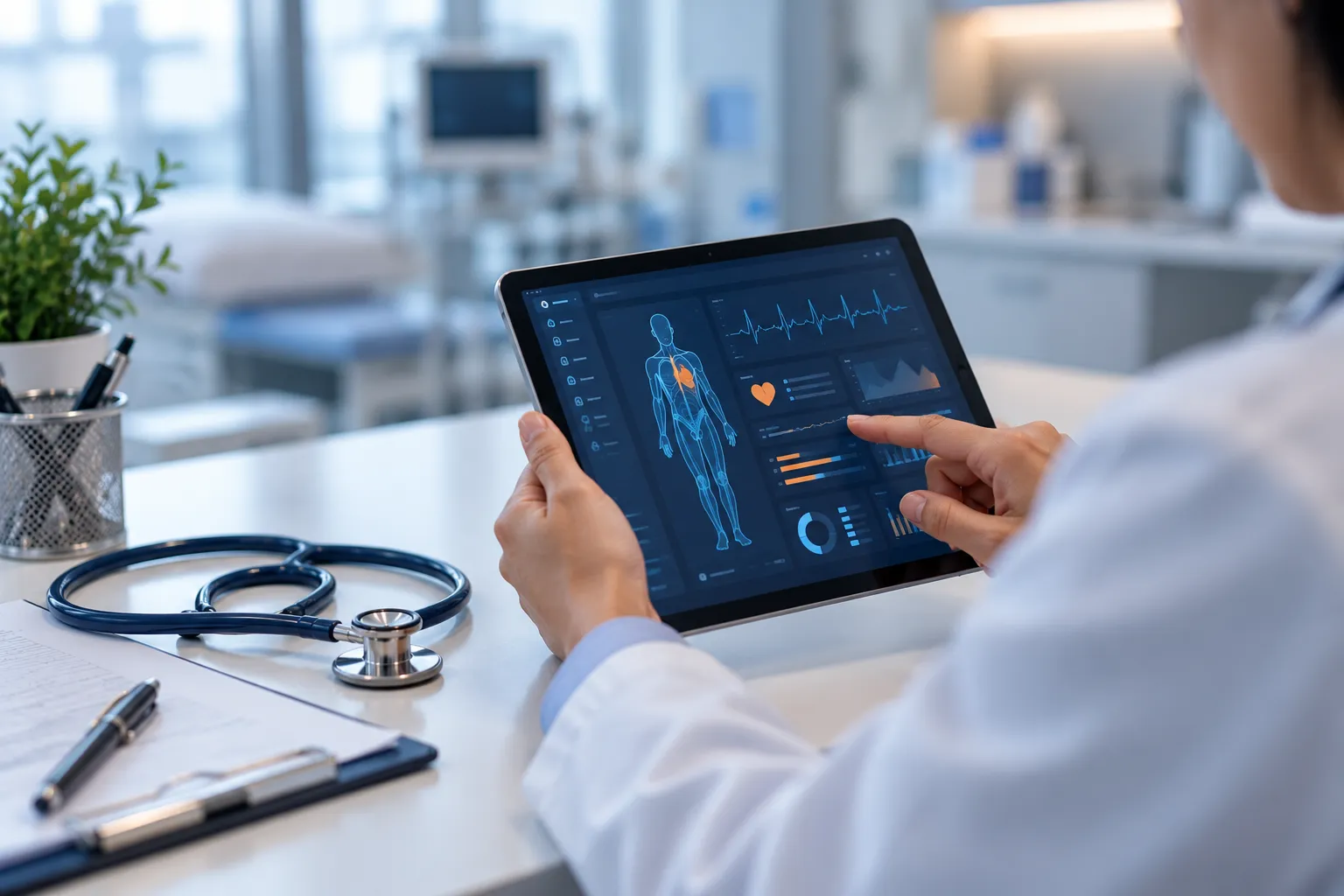
Healthcare SaaS products support structured workflows, user access, data handling, integrations, automation, and scalable experiences while addressing relevant security and operational requirements.

Retail & eCommerce
Retail and eCommerce SaaS products support customer workflows, transactions, administration, analytics, integrations, and automation while adapting to changing users and operational requirements.

Real Estate
Real estate SaaS platforms connect property workflows, users, information, communication, reporting, integrations, and administration around specific operational and customer experience requirements.

Manufacturing
Manufacturing SaaS applications support operational workflows, data, users, integrations, automation, reporting, and process visibility while accommodating evolving organisational and platform requirements.

Aviation
Aviation SaaS products support specialised workflows, multiple user roles, operational information, integrations, reporting, and scalability around specific processes and operational requirements.

Logistics
Logistics SaaS platforms connect operational workflows, users, information, integrations, automation, reporting, and visibility while supporting evolving requirements across logistics processes.

Education
Education SaaS platforms support learners, educators, administrators, workflows, communication, content, reporting, and user management while accommodating varied roles, integrations, and access requirements.
Why Wildnet Edge
Why Choose Wildnet Edge for SaaS Development
Choose an end-to-end SaaS product engineering partner combining architecture, UX/UI, AI integration, modernisation, security, and long-term development support.

Business-Focused SaaS Product Engineering
Connect product engineering with business requirements, user workflows, product functionality, and practical outcomes throughout the SaaS development lifecycle.

Scalable SaaS Architecture
Build architecture around multi-tenancy, integrations, performance, security, infrastructure, data, and future product requirements from the beginning.

Experienced SaaS Development Team
Bring product development, architecture, UX/UI, integrations, testing, deployment, and optimisation together through an experienced SaaS engineering team.

Product UX/UI Expertise
Design user journeys and workflows around customer needs, product functionality, user roles, and practical usability requirements.

AI Integration Capabilities
Integrate relevant AI capabilities into SaaS products for automation, search, personalisation, analytics, reporting, assistants, and customer support.

SaaS Modernisation Experience
Modernise existing SaaS platforms across architecture, APIs, databases, infrastructure, performance, UI/UX, monitoring, and other technical requirements.

Security & Performance Engineering
Consider security, performance, reliability, and scalability throughout SaaS architecture, development, testing, deployment, and ongoing optimisation.

Long-Term Post-Launch Support
Continue supporting SaaS products through monitoring, optimisation, issue resolution, new capabilities, infrastructure improvements, and ongoing platform scaling. Pasted markdown
In Their Words
Rated 4.89 across 104 reviews
Quotes are from engineering and product leaders, the people who own the outcome.

“Partnering with Wildnet Edge was a game-changer for our department. Their deep understanding of government processes, combined with cutting-edge AI capabilities, helped us modernize outdated systems with minimal disruption. The result? A faster, smarter, and more transparent public service delivery model.”

“Wildnet Edge truly exceeded our expectations. Their AI-first approach helped us streamline product development and automate key workflows, allowing our team to focus on innovation. Their proactive collaboration and agile execution felt like having a tech co-founder on our side.”

“Working with Wildnet Edge was transformative. They brought deep expertise in AI, cloud, and agile delivery that enabled us to modernize legacy systems without disruption. Their ability to deliver complex solutions at scale made them an essential partner in our digital evolution.”
Straight answers
The questions you were going to ask on the call.
Clear expectations make better partnerships. Here is where the conversation starts.
What is SaaS development?
SaaS development builds software customers access as a service, covering product functionality, architecture, users, integrations, infrastructure, security, deployment, and ongoing optimisation.
How much does it cost to develop a SaaS product?
SaaS development costs vary by complexity, scope, users, architecture, integrations, billing, security, AI functionality, infrastructure, testing, and post-launch support requirements.
How long does it take to build a SaaS application?
Development timelines depend on scope, feature count, complexity, integrations, architecture, design, team size, testing, deployment requirements, and production expectations.
What is the difference between SaaS product development and custom software development?
SaaS product development delivers software as an ongoing service, requiring multi-tenancy, subscriptions, centralised delivery, scalable infrastructure, user management, and continuous evolution.
Can you build a SaaS product from an idea or MVP?
Yes. SaaS development can begin with an idea or MVP by defining users, workflows, priorities, architecture, integrations, scalability, and product requirements.
How do you build a scalable multi-tenant SaaS application?
Scalable multi-tenant SaaS requires planning tenant structures, user roles, permissions, data architecture, backend scalability, integrations, infrastructure, performance, security, and monitoring.
Can you modernise an existing SaaS platform?
Yes. Existing SaaS platforms can be modernised incrementally across architecture, cloud infrastructure, APIs, databases, performance, security, UI/UX, AI, and monitoring.
Can you integrate AI into an existing SaaS product?
Yes. AI can support workflow automation, search, recommendations, predictive analytics, assistants, customer support, reporting, and user behaviour analysis within existing SaaS products.
How do you secure a SaaS application?
SaaS security involves access controls, role-based permissions, integrations, infrastructure, testing, deployment, monitoring, and relevant security or compliance requirements throughout development.
Do you provide post-launch SaaS maintenance and scaling?
Yes. Post-launch support can include performance monitoring, issue resolution, new capabilities, infrastructure optimisation, functionality improvements, and ongoing product scaling.
Contact Us
Let’s Build for Outcome
Let’s co-create solutions that deliver measurable impact.
Get started
The Technology Edge Your Business Deserves.
A working session, not a pitch. 30 minutes session on solving your problem.
Prefer to just pick a time? Book a 30-minute roadmap call