



AI in Cybersecurity Services
AI in Cybersecurity Services for Smarter Security Operations
AI in cybersecurity helps security teams analyse large volumes of security data, identify unusual patterns, prioritise potential threats, and automate repetitive workflows while keeping people involved in important decisions.
- Threat Detection · Security Analytics · Anomaly Detection · Workflow Automation · AI Integration
Our AI Partners
Trusted Technology for Enterprise AI
We partner across leading AI platforms, so our recommendations are personalised based on what fits your business, not a single vendor.







Overview
Why Businesses Are Using AI in Cybersecurity
Security teams increasingly manage large volumes of alerts, logs, events, systems, and potential incidents. AI can help organise this information, identify relevant patterns, and support faster investigations.
Analyse Large Volumes of Security Data
AI can process large volumes of security logs, events, and signals, helping teams examine relevant information without relying entirely on slow manual analysis.
Identify Unusual Activity
AI can compare incoming activity with established patterns, highlighting unusual behaviour that security professionals can review and investigate according to their operating procedures.
Prioritise Security Alerts
AI can analyse alert context, behavioural signals, historical patterns, and asset relevance, helping security teams focus attention where investigation may require greater priority.
Reduce Repetitive Security Tasks
AI can support repetitive activities such as information collection, alert enrichment, classification, reporting, and routing, allowing security professionals to spend more time on meaningful investigations.
Support Faster Investigation
AI can organise relevant security information, correlate related events, and provide investigation summaries, helping analysts access useful context while retaining responsibility for validating findings.
Connect Security Data Across Systems
AI security solutions can work across connected security environments, bringing relevant information from monitoring tools, applications, identity systems, cloud environments, and other sources.
Improve Threat Context
AI can combine security signals, historical information, behavioural patterns, and related events to provide additional context that helps analysts understand why activity may require investigation.
Scale Security Operations
AI-powered cybersecurity capabilities can support growing security operations by processing more information and repetitive workflows while maintaining defined controls, escalation paths, and human oversight.
Our Services
Our AI Cybersecurity Services
Our AI security solutions connect security data, AI analysis, and practical workflows to support threat detection, investigation, prioritisation, automation, integration, and security operations.
- 1. AI-Powered Threat Detection Analyse security events, network activity, application signals, and authentication data to identify unusual patterns and prioritise potential threats for faster investigation and informed security decisions.
- 2. AI-Based Anomaly Detection Analyse user, system, network, and access activity against established patterns to identify meaningful deviations that may require security team review or further investigation.
- 3. AI Security Analytics Correlate security logs, events, alerts, identity data, and infrastructure activity across systems to uncover patterns, improve visibility, and support better-informed security operations.
- 4. Intelligent Alert Prioritisation Analyse alert context, severity indicators, asset relevance, historical patterns, and behavioural signals to help security teams prioritise alerts requiring faster investigation and review.
- 5. AI-Assisted Threat Investigation Organise security event context, related activity, historical information, and correlated data to help analysts investigate alerts efficiently while maintaining human validation and decision-making.
- 6. Security Workflow Automation Use AI to support defined security workflows such as alert enrichment, event classification, ticket creation, reporting, information routing, and repetitive investigation tasks with appropriate controls.
- 7. AI Security Data Integration Connect security tools, identity systems, cloud environments, applications, APIs, and data pipelines with AI analysis layers to support connected security insights and operational workflows.
- 8. Threat Intelligence Solutions Organise and analyse relevant threat intelligence with AI to help security teams connect information, enrich investigations, identify patterns, and support more informed security decisions.
- 9. Custom AI Applications for Cybersecurity Build custom AI security applications around your existing workflows, data, and systems, including investigation tools, security dashboards, alert analysis platforms, and workflow assistants.
- 10. AI Security Optimisation & Support Monitor AI security workflows, review outputs, refine solutions, and optimise integrations as security environments evolve, helping teams maintain practical and effective AI-supported operations.
Threat Detection
AI-Powered Threat Detection
AI-powered threat detection can analyse security events, network activity, application activity, authentication events, behavioural patterns, and historical information.
The system can process large volumes of security signals and identify patterns or deviations that may warrant investigation rather than automatically classifying every anomaly as a confirmed threat.

Security Signals
Network activity, application events, authentication activity, behavioural patterns, historical security information, and relevant security events provide the information AI can analyse.
Pattern Analysis
AI can identify relationships and deviations across available information, helping security teams surface activity that may deserve additional investigation.
Alert Support
Identified patterns can contribute to alert generation or prioritisation workflows, with security teams reviewing relevant context before determining appropriate action.
Anomaly Detection
AI-Based Anomaly Detection
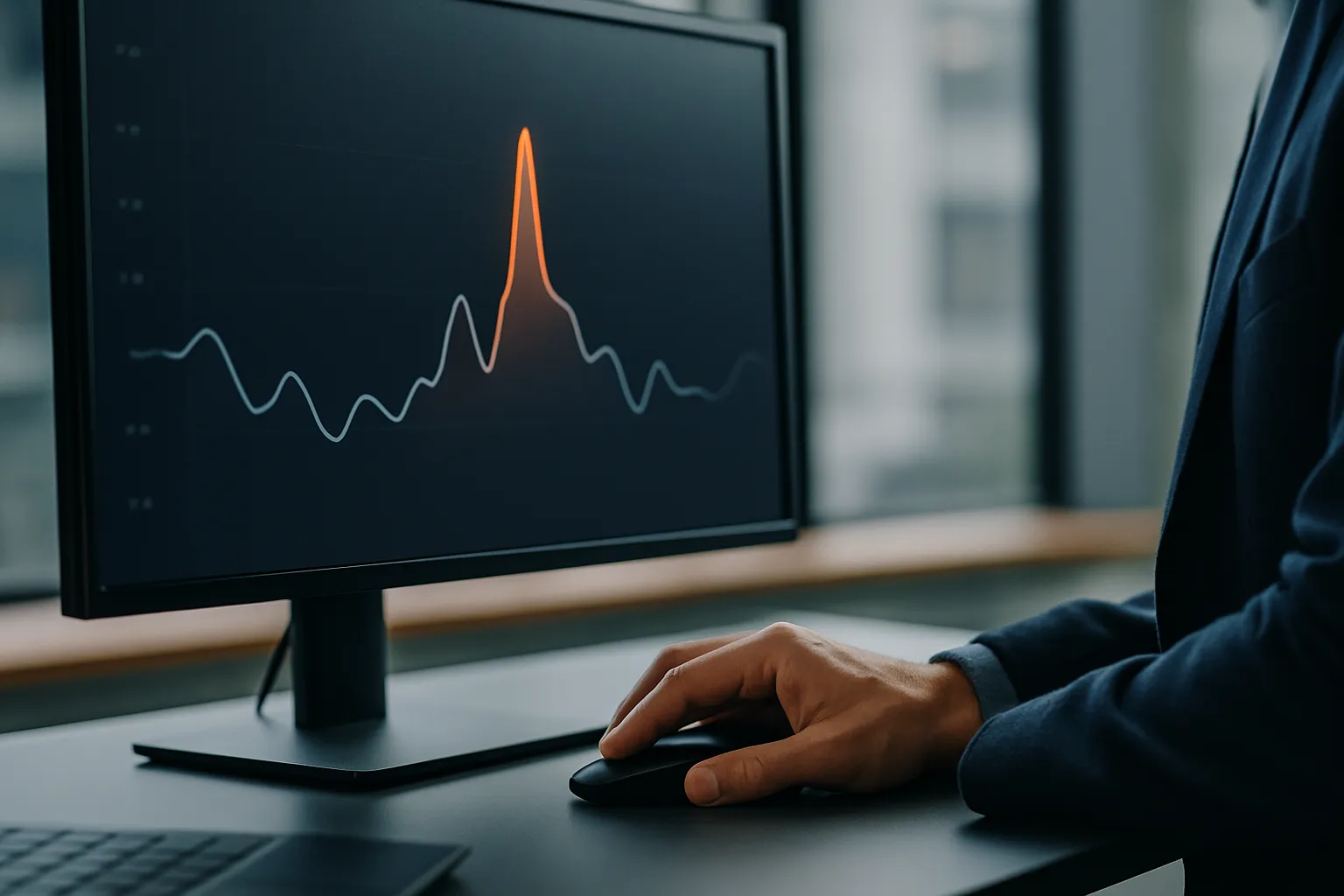
AI-based anomaly detection focuses on activity that differs from established or expected patterns across users, systems, networks, applications, access events, and relevant transactions.
AI can analyse historical behaviour to establish useful baselines and compare incoming activity against those patterns, helping teams identify deviations that may require additional attention.
Data Considered
User behaviour, system activity, network behaviour, access events, application activity, and transaction patterns where relevant can contribute to anomaly analysis.
Anomaly Scoring
AI-supported anomaly scoring can help distinguish activity requiring review from expected behaviour without automatically treating every deviation as a cyberattack.
Security Analytics
AI Security Analytics & Data Analysis
Businesses managing security information across multiple tools can use AI to process and correlate logs, events, alerts, application data, identity information, and infrastructure activity.

Security Data
Relevant information may include security logs, events, alerts, application activity, identity-related information, infrastructure activity, and other governed security sources.
AI Analysis
AI can analyse patterns and relationships across available information, helping teams connect relevant signals that may otherwise remain distributed across different systems.
Security Insight
The value comes from helping teams analyse and correlate information across complex environments while maintaining validation of AI-generated outputs.
Alert Prioritisation
Intelligent Alert Prioritisation
Security teams managing high alert volumes need practical ways to determine which alerts may require faster investigation.
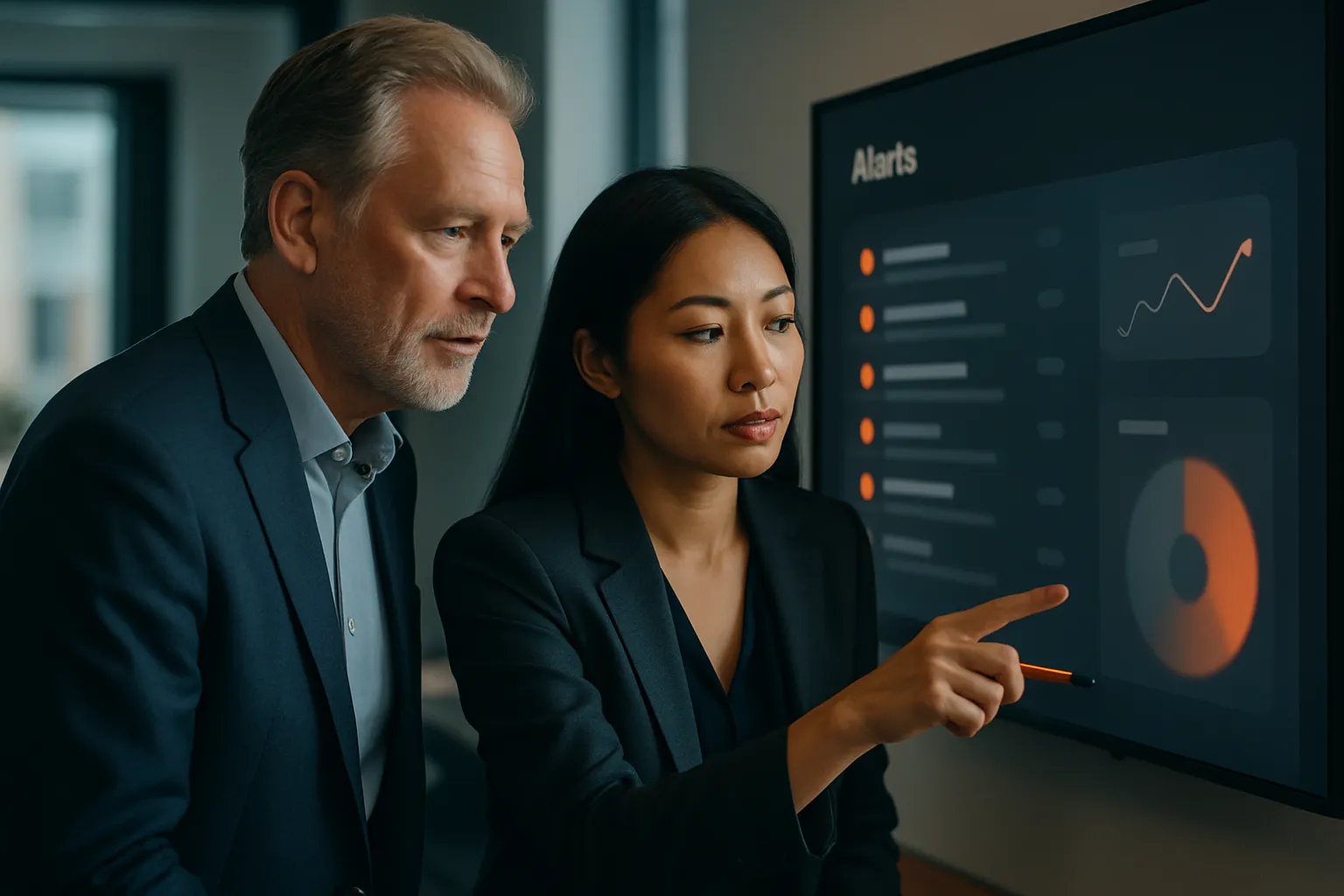
AI can evaluate alert context, historical patterns, severity indicators, asset relevance, behavioural signals, and established prioritisation logic.
Alert Context
AI can combine available alert information with relevant historical and behavioural signals to provide additional context for prioritisation.
Priority Assessment
AI-supported prioritisation can help teams focus attention on alerts that may require faster investigation without claiming complete removal of false positives.
Analyst Review
Security professionals review prioritised alerts, validate relevant information, and determine the appropriate next step according to established workflows.
Threat Investigation
AI-Assisted Threat Investigation
AI can support analysts by organising security event context, related events, historical information, data correlations, investigation summaries, and identified patterns.

Contextual Analysis
AI can bring relevant security information together so analysts can evaluate related activity without manually organising every available data point.
Investigation Support
AI can assist with information organisation, correlation, pattern identification, and investigation summaries while security professionals remain responsible for validating findings.
Analyst Decision
The final decision remains within the organization’s established security workflow, including escalation, response, approval, and other operating procedures.
Workflow Automation
Security Workflow Automation With AI
AI can support repetitive and clearly defined security workflows where the organisation has established appropriate rules, risk levels, escalation requirements, and review controls.
Automation Use Cases
Alert Enrichment
Add relevant contextual information to security alerts before analyst review.
Data Collection
Gather defined information from connected systems as part of an established workflow.
Incident Ticket Creation
Create tickets from qualifying events using predefined workflow conditions.
Initial Event Classification
Support initial categorisation of defined security events before further review.
Security Reporting
Assist with repetitive reporting activities using relevant security information.
Information Routing
Route security information according to defined business or security rules.
Repetitive Investigation Steps
Support clearly defined investigation activities without removing required analyst validation.
Data Integration
AI Security Data Integration
AI security solutions depend on relevant, properly governed data and integration with the systems where security teams already operate.
Security Information Sources
Integration can involve monitoring tools, identity systems, cloud environments, applications, APIs, data pipelines, and internal security platforms.
Data & Integration Layer
Relevant information must be connected, processed, and made available to the AI analysis layer according to appropriate access and governance requirements.
AI Analysis Layer
AI can analyse connected information for detection, correlation, prioritisation, investigation support, and defined workflow automation.
Security Workflow
Outputs can feed security insights or controlled automation while remaining connected to security teams and response systems.
Custom Applications
Custom AI Applications for Cybersecurity
Organisations with specialised security workflows may require capabilities beyond standard security platforms. Custom development can align AI with existing systems, data, and operational requirements.
Possible Applications
Internal Security Analytics Platforms
Centralise relevant security information and AI-supported analysis around organisational workflows.
AI-Assisted Investigation Tools
Help analysts organise and analyse information during defined investigation processes.
Security Intelligence Dashboards
Present relevant security information, patterns, trends, and workflow priorities.
Custom Alert Analysis Applications
Support organisation-specific alert context and prioritisation requirements.
Security Workflow Assistants
Support defined repetitive security tasks while retaining appropriate human controls.
Data Correlation Systems
Connect relevant security information across multiple systems and sources.
AI-Powered Security Portals
Provide tailored interfaces around specific security information and workflow requirements.
Custom AI applications should be considered where specific requirements justify tailored development rather than assuming every organisation needs a custom platform.
Use Cases
AI in Cybersecurity Use Cases by Business Function
Different security and business teams interact with security information differently. AI capabilities can therefore be aligned with the specific workflow, data, and decision requirements of each function.
Security Operations Teams
Challenge: High alert volumes and repetitive investigation activities can consume analyst attention.
AI Capability: AI supports alert analysis, event correlation, investigation assistance, and repetitive operational workflows.
Outcome: Analysts receive structured information and workflow support for relevant security activities.
IT & Infrastructure Teams
Challenge: Infrastructure environments generate system events, access activity, and operational signals across connected environments.
AI Capability: AI analyses infrastructure activity, system events, access patterns, and operational signals.
Outcome: Teams gain additional context for reviewing infrastructure-related security activity.
Identity & Access Teams
Challenge: Authentication and access activity can involve large numbers of users, systems, and events.
AI Capability: AI analyses authentication activity, unusual access behaviour, and relevant access workflows.
Outcome: Teams can identify activity requiring additional review and support established access workflows.
Risk & Compliance Teams
Challenge: Security information can be distributed across systems and difficult to organise for operational reporting.
AI Capability: AI supports security data analysis, information organisation, and defined reporting workflows.
Outcome: Teams can work with more organised security information while maintaining appropriate review requirements.
Leadership & Security Management
Challenge: Leadership needs visibility into security operations, trends, workflow priorities, and operational requirements.
AI Capability: AI-supported analysis can organise relevant operational information across security workflows.
Outcome: Leaders receive clearer operational context for security planning and workflow discussions.
Industries
AI in Cybersecurity by Industry
AI-powered security solutions can be adapted to different industry environments, helping teams analyse relevant security data, identify unusual activity, and improve investigation workflows.

Financial Services
Analyse transaction activity, authentication events, customer-data environments, and security signals to identify unusual patterns and help security teams prioritise relevant activity for investigation.

Healthcare
Support security teams across patient-data systems, clinical applications, connected devices, and identity platforms by analysing activity patterns and surfacing signals that may require further review.

Technology & SaaS
Analyse cloud applications, APIs, infrastructure, identity activity, and application signals to help technology teams identify behavioural deviations and improve security monitoring across distributed environments.
Retail & E-commerce
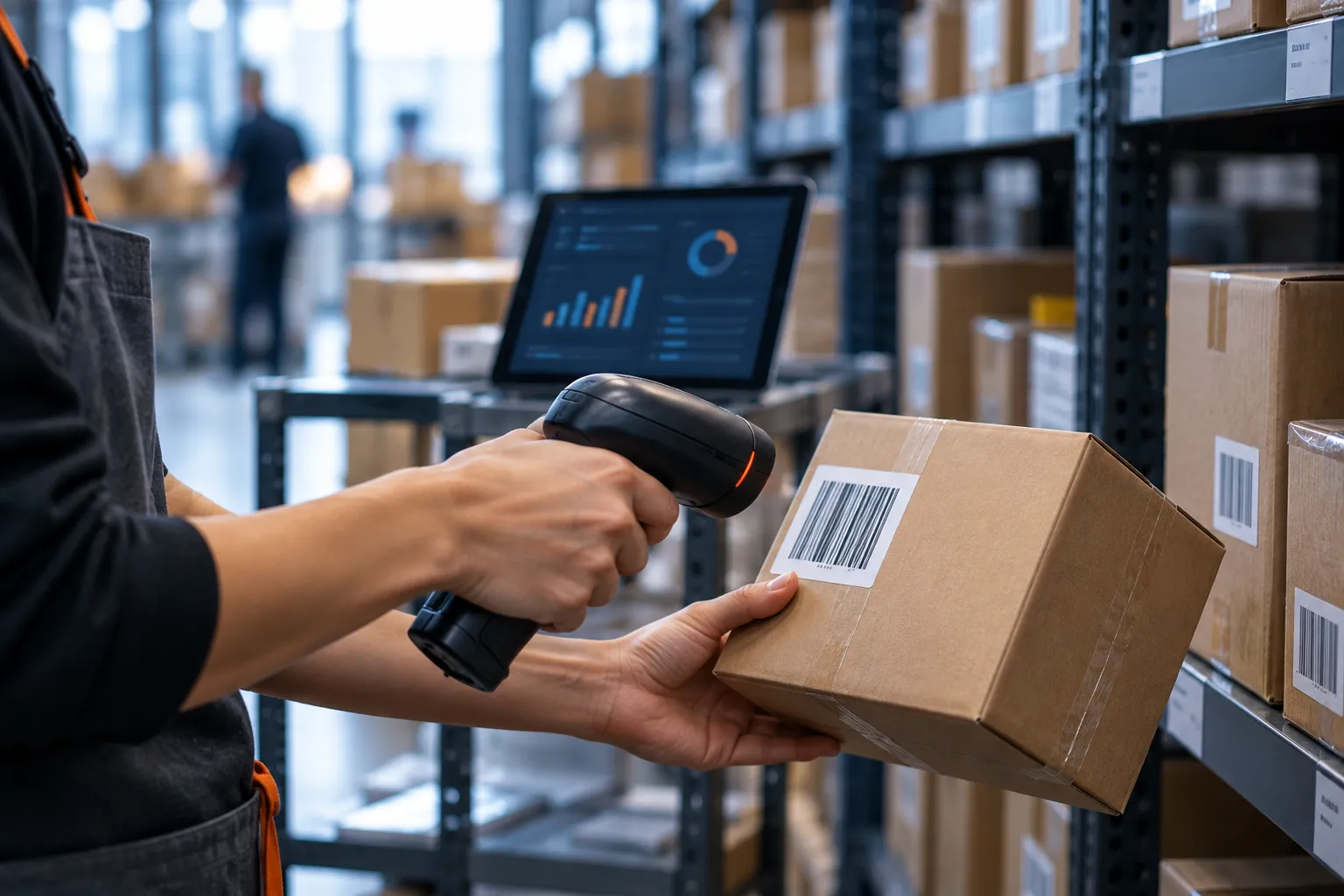
Use AI to analyse transaction, customer-facing application, authentication, and cloud activity, helping security teams identify unusual patterns and focus investigation efforts where needed.
Manufacturing
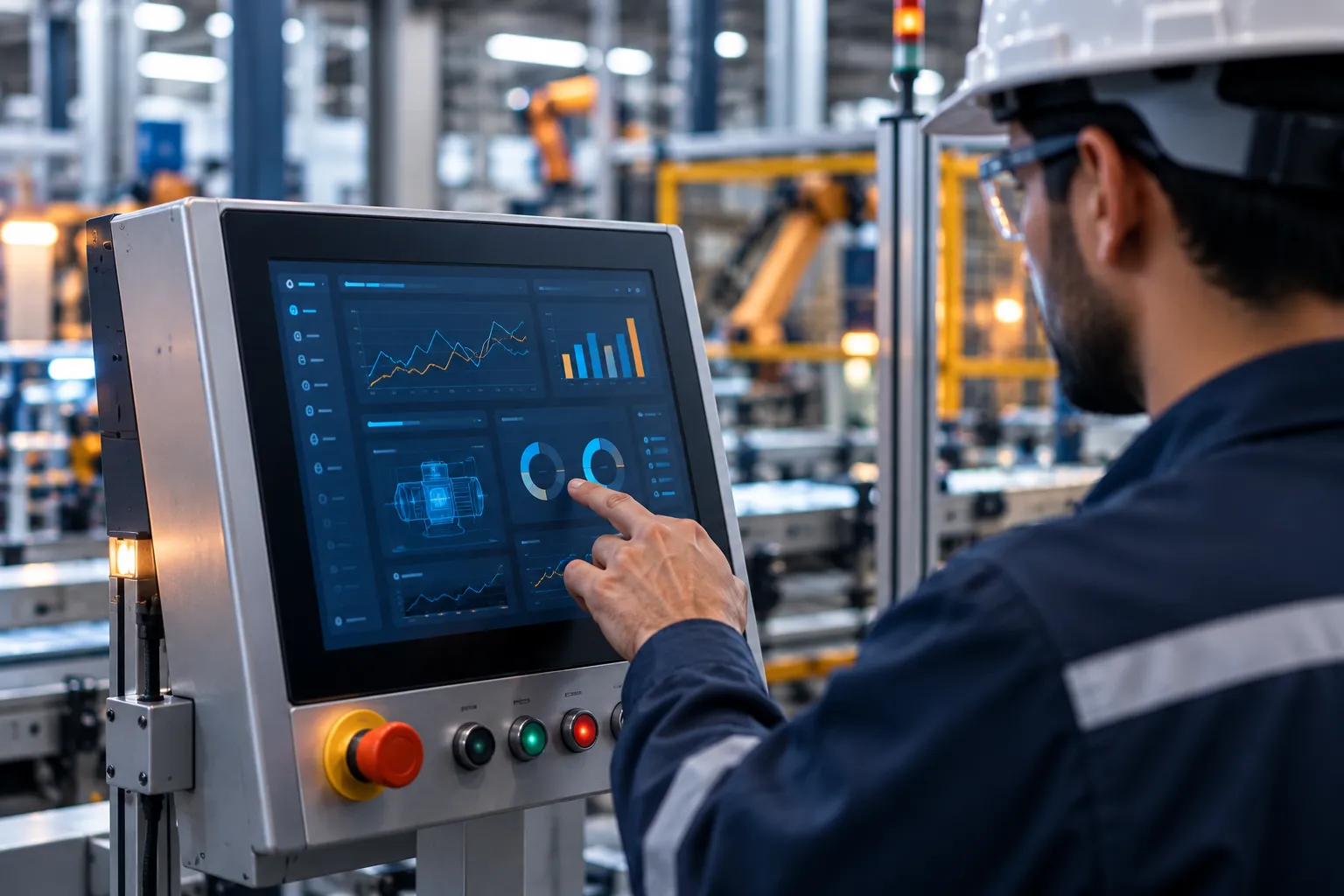
Connect security insights across enterprise applications, infrastructure, connected operational systems, and devices to help teams identify unusual activity and investigate relevant security signals.

Insurance
Analyse identity, application, transaction-related, and infrastructure activity to help insurance organisations identify unusual patterns, prioritise security information, and support investigation workflows.

Professional Services
Analyse authentication, application, cloud, and access activity across distributed environments to help teams identify unusual behaviour and improve visibility during security investigations.

Enterprise Software
Correlate application, API, identity, and infrastructure signals across complex environments to help security teams identify relevant patterns and support more efficient investigation workflows.
Security Architecture
How AI Fits Into an Existing Security Environment
AI cybersecurity architecture should work alongside existing security systems and teams rather than attempting to replace the entire security environment.
Data Ingestion
Relevant information enters the architecture from existing security, application, identity, infrastructure, cloud, and network sources.
Integration & Processing
Data is connected and processed through an integration layer designed around available systems, APIs, pipelines, access requirements, and security workflows.
AI Analysis
The AI layer supports analysis relevant to detection, correlation, prioritisation, investigation, and defined automation.
Human Validation
Security teams review important outputs and make decisions according to risk models, operating procedures, and workflow requirements.
Monitoring
The environment should support ongoing monitoring of AI outputs, workflows, integrations, and changing security requirements.
Governance
Security, Privacy & Governance Considerations for AI
AI used within security workflows should be designed with controls around data access, sensitive information, permissions, output validation, human oversight, monitoring, integration security, governance, and change management.
Data Access Controls
Define which security information AI systems can access and ensure data availability aligns with the intended workflow and organisational requirements.
Sensitive Information Handling
Security environments may contain sensitive information that requires appropriate handling, access restrictions, and controlled processing throughout the AI workflow.
Identity & Permissions
Access should be governed according to defined identities, permissions, roles, and system requirements rather than treating AI access as unrestricted.
Model & Output Validation
AI-generated analysis should be reviewed and validated according to the importance and risk of the associated security workflow.
Human Oversight
Important security decisions should retain appropriate human review, escalation, approval, or validation requirements.
Logging & Monitoring
Security teams should maintain appropriate visibility into relevant activity, outputs, workflow execution, and changes over time.
Integration Security
APIs, data pipelines, connected platforms, and system integrations should be considered as part of the overall security architecture.
Governance & Change Management
AI security capabilities should operate within defined governance processes and be reviewed as systems, data, workflows, and requirements evolve.
Human Oversight
AI Security Solutions With Human Oversight
Human oversight is an important part of responsible AI security workflows, particularly where outputs influence investigation, escalation, approvals, or high-risk security actions.
AI Analysis
AI processes available security information and identifies patterns, context, anomalies, or other relevant signals.
Confidence & Context Assessment
Outputs can be evaluated against confidence thresholds, available context, workflow requirements, and the organization’s established risk model.
Automated Low-Risk Workflow
Defined low-risk activities may proceed through approved automation when appropriate rules, controls, and escalation requirements are established.
Human Review
Higher-risk or uncertain situations can be routed to security professionals for validation, investigation, and decision-making.
Security Decision
Security teams remain responsible for determining appropriate action according to established procedures and risk requirements.
Action
The approved workflow proceeds with appropriate controls, approvals, escalation, and monitoring.
Our Process
Our AI Cybersecurity Development Process
We begin with the security workflow and operational challenge, assess the available data and systems, then build, validate, deploy, and optimise the appropriate AI capability.
Security & Business Discovery
Understand security workflows, operational challenges, systems, data sources, business requirements, and the problems AI may need to support.
Data & System Assessment
Assess available security data, system connectivity, access requirements, data quality, integration points, and implementation constraints.
Use Case Prioritisation
Identify AI use cases according to operational value, feasibility, available data, implementation requirements, and relevant risk considerations.
Solution Architecture
Define the AI, data, integration, security, access, workflow, and human-validation architecture required for the proposed capability.
Development & Integration
Build required AI capabilities and connect them with relevant security systems, applications, APIs, data pipelines, and operational workflows.
Testing & Validation
Test outputs, workflows, integrations, and defined security scenarios before the solution enters its intended operational environment.
Deployment
Deploy the approved solution with appropriate controls, access requirements, workflow responsibilities, and security considerations.
Monitoring & Optimisation
Monitor performance, review outputs, and refine the solution as security environments, workflows, systems, and requirements evolve.
What Sets Our Approach Apart
Why Choose Wildnet Edge for AI in Cybersecurity?
Wildnet Edge brings together AI development, custom software engineering, system integration, automation, and security-focused solution design for practical AI security requirements.

AI & Machine Learning Expertise
Apply AI and machine learning capabilities to security workflows involving threat analysis, anomaly detection, correlation, prioritisation, and investigation support.

Cybersecurity Use Case Development
Start with the security challenge and workflow before selecting practical AI use cases based on available data, feasibility, and risk.

Custom AI Applications
Develop tailored security applications when existing platforms do not fully address specific organisational workflows, data environments, or operational requirements.

Security Data Integration
Connect AI capabilities with security systems, monitoring platforms, identity environments, cloud services, applications, APIs, and internal platforms.

API & System Integration
Build connections between AI capabilities and the systems where security information is generated, processed, reviewed, and acted upon.

Intelligent Workflow Automation
Automate defined repetitive activities using appropriate rules, risk levels, escalation requirements, and human-review controls.

Human-in-the-Loop Design
Design workflows around analyst review, validation, confidence thresholds, escalation paths, approvals, and high-risk action requirements.

Scalable Architecture
Design AI, data, integration, security, and workflow layers that can operate alongside existing environments and evolve over time.

Security & Access Considerations
Consider data access, permissions, sensitive information handling, integration security, monitoring, governance, and change management during solution design.

Testing & Validation
Validate AI outputs, integrations, workflows, and defined security scenarios before deployment and continue reviewing the solution after implementation.

Custom Software Engineering
Combine AI capabilities with custom application development where specialised security workflows require tailored interfaces, platforms, or operational tools.

Ongoing Optimisation
Review outputs, integrations, workflows, and changing requirements to refine AI-supported security capabilities as the operating environment evolves.
Cost & Timeline
AI Cybersecurity Project Cost & Timeline
AI cybersecurity project scope varies significantly depending on the security data environment, number of systems, AI use cases, integrations, automation requirements, controls, testing, and ongoing support.
Cost Factor – Security Data Sources
The number of security data sources affects integration requirements, data processing, architecture, and the overall complexity of the implementation.
Cost Factor – Data Volume & Quality
Data availability, quality, structure, and volume can influence processing requirements and the effort required to prepare information for AI analysis.
Cost Factor – Existing Security Systems
Existing monitoring tools, identity platforms, cloud environments, applications, APIs, and internal systems can affect integration scope.
Cost Factor – AI Use Case Complexity
A focused anomaly-detection workflow can require substantially different development effort from a broader multi-system AI security capability.
Cost Factor – Custom Development
Custom applications, dashboards, investigation tools, workflow assistants, or specialised security platforms can increase development requirements.
Cost Factor – Automation & Controls
Workflow automation, security controls, testing, validation, monitoring, and ongoing support can influence overall project scope.
Timeline Factor – Data & Access
Data availability, system access, integration readiness, and use-case definition can affect how quickly development can progress.
Timeline Factor – Architecture & Development
Architecture complexity, development scope, integrations, testing, security validation, and deployment environment all contribute to project timelines.
In Their Words
Rated 4.89 across 104 reviews
Quotes are from engineering and product leaders, the people who own the outcome.

“Partnering with Wildnet Edge was a game-changer for our department. Their deep understanding of government processes, combined with cutting-edge AI capabilities, helped us modernize outdated systems with minimal disruption. The result? A faster, smarter, and more transparent public service delivery model.”

“Wildnet Edge truly exceeded our expectations. Their AI-first approach helped us streamline product development and automate key workflows, allowing our team to focus on innovation. Their proactive collaboration and agile execution felt like having a tech co-founder on our side.”

“Working with Wildnet Edge was transformative. They brought deep expertise in AI, cloud, and agile delivery that enabled us to modernize legacy systems without disruption. Their ability to deliver complex solutions at scale made them an essential partner in our digital evolution.”
Straight answers
The questions you were going to ask on the call.
Clear expectations make better partnerships. Here is where the conversation starts.
What is AI in cybersecurity?
AI in cybersecurity applies AI capabilities to security data and workflows, supporting threat analysis, anomaly detection, analytics, alert prioritisation, investigation, automation, and security decision-making.
How is artificial intelligence used in cybersecurity?
AI can analyse security events, logs, identity activity, application signals, network behaviour, and historical information to identify patterns, correlate context, prioritise alerts, and support defined workflows.
Can AI help detect cyber threats?
AI can identify patterns or deviations in security signals that may warrant investigation. An anomaly should not automatically be treated as a confirmed cyber threat.
What is AI-based anomaly detection?
AI-based anomaly detection compares incoming activity with established behavioural or operational patterns, highlighting deviations across users, systems, networks, applications, access events, or relevant transactions.
Can AI reduce the number of security alerts teams need to investigate?
AI can support alert prioritisation by evaluating context, historical patterns, severity indicators, asset relevance, and behavioural signals, helping teams focus attention on potentially important alerts.
Can AI automate cybersecurity workflows?
AI can support defined workflows such as alert enrichment, data collection, ticket creation, initial classification, reporting, information routing, and repetitive investigation activities with appropriate controls.
Can AI integrate with existing security tools?
AI can integrate with monitoring tools, identity systems, cloud environments, applications, APIs, data pipelines, and internal security platforms when relevant data and access requirements are addressed.
Can AI replace cybersecurity professionals?
AI supports cybersecurity professionals rather than replacing them. Analysts remain important for validation, investigation, escalation, decision-making, approvals, and high-risk security actions.
Contact Us
Let’s Build for Outcome
Let’s co-create solutions that deliver measurable impact.
Get started
The Technology Edge Your Business Deserves.
A working session, not a pitch. 30 minutes session on solving your problem.
Prefer to just pick a time? Book a 30-minute roadmap call