



Salesforce Solutions & Services
Salesforce Solutions Built Around Your Business
Your Salesforce environment should connect customer data, business systems, workflows, and teams around how your organisation actually operates, grows, and serves customers.
- Salesforce Consulting
- Custom Development
- System Integration
- Workflow Automation
- Ongoing Support
Our Technology Partners
Built on Trusted Technology Platforms
We work across leading cloud, CRM, and AI platforms, so every recommendation is based on what fits your business, not a single vendor.






Why It Matters
Why Businesses Need Custom Salesforce Solutions
As teams, systems, and customer processes grow, disconnected data and manual workflows can make everyday operations harder to manage and scale efficiently.
Connect Customer Data Across Systems
When customer information sits across multiple systems, teams can struggle to access consistent information. Salesforce can connect relevant data sources around shared workflows.
Streamline Sales and Service Workflows
Disconnected sales and service activities can create unnecessary handoffs. Salesforce workflows can organize routing, follow-ups, cases, and customer activities around defined business processes.
Customise Salesforce Around Business Processes
Your business may have specialised processes that standard Salesforce configurations cannot fully support. Customisation can adapt Salesforce while improving and standardising those processes.
Automate Repetitive Operations
Manual task creation, approvals, notifications, and updates can consume team effort. Salesforce automation can apply clearly defined business rules consistently across recurring activities.
Improve Data Visibility
When information is spread across applications, reporting becomes harder to manage. Connected Salesforce data can provide teams with clearer visibility into relevant operations.
Integrate Existing Business Applications
Salesforce often needs to work alongside ERP, marketing, finance, service, ecommerce, internal, and cloud applications rather than operate independently.
Support Team Adoption
Salesforce needs to reflect how different users actually work. Role-based experiences, workflows, permissions, and readiness can support smoother adoption across teams.
Scale Salesforce as Requirements Evolve
Growing users, customer volumes, integrations, and processes can change Salesforce requirements. Scalable architecture helps the environment adapt as business needs evolve.
Consulting
Salesforce Consulting Services
Salesforce consulting aligns your business goals, processes, systems, data, integrations, and growth requirements with a practical strategy before implementation, supported by broader IT Consulting Services where needed.
Our consulting approach covers:
- Current-State Assessment: Review Salesforce, existing applications, workflows, data structures, and operational dependencies.
- Business Process Analysis: Identify process gaps, manual activities, handoffs, approvals, and areas requiring improvement.
- Salesforce Roadmap Planning: Define a practical roadmap aligned with business priorities, requirements, and future growth.
- Solution Architecture: Establish the Salesforce architecture, components, integrations, workflows, and technical structure required.
- Customisation Requirements: Determine where Salesforce configuration or custom development is necessary.
- Integration Requirements: Identify systems, APIs, applications, and data flows Salesforce needs to connect with.
- Data Strategy: Plan data structures, migration requirements, cleansing, mapping, validation, and governance.
- Automation Opportunities: Identify repetitive processes suitable for Salesforce workflow automation.
- Scalability Planning: Design an approach that can accommodate evolving users, processes, integrations, and business requirements.
Our Services
Our Salesforce Solutions & Services
We align Salesforce with your business processes, systems, users, and growth goals through consulting, implementation, customisation, development, integration, automation, migration, and ongoing optimisation.
Salesforce Consulting
We assess business processes, Salesforce requirements, integrations, data needs, and scalability to create a practical roadmap supporting better workflows, informed decisions, and sustainable Salesforce adoption.
Salesforce Implementation
We configure Salesforce around your teams, processes, data, workflows, and user requirements, supporting structured deployment from discovery and setup through testing, readiness, and launch.
Salesforce Customisation
We adapt Salesforce objects, workflows, approvals, business rules, permissions, and user experiences to support specialised processes that standard configurations cannot fully accommodate across teams.
Salesforce Development
We build custom Salesforce functionality, backend logic, applications, workflows, and API connections when standard capabilities cannot address specific operational requirements, supported by Custom Software Development Services where broader engineering is required.
Salesforce Integration
We connect Salesforce with ERP, marketing, finance, ecommerce, service, cloud, internal, and third-party systems through API Development Services, supporting reliable data flow and connected business workflows.
Salesforce Workflow Automation
We automate lead routing, approvals, tasks, notifications, case management, updates, and follow-ups using defined business rules, combining Salesforce capabilities with Intelligent Automation Services where broader process automation is required.
Salesforce Data Migration
We assess, cleanse, map, transform, migrate, validate, and reconcile data from legacy CRMs, spreadsheets, databases, and disconnected applications to establish reliable Salesforce information.
Salesforce App Development
We develop business-specific applications and experiences within Salesforce to support specialised workflows, user requirements, data processes, and operational functionality through broader Enterprise Application Development Services.
Salesforce Optimisation
We review existing Salesforce configurations, workflows, integrations, data structures, and user requirements to identify improvements supporting evolving business processes, performance, and scalable Software Development Services where additional engineering is required.
Salesforce Managed Support
We provide ongoing Salesforce support for evolving requirements, workflow improvements, integrations, optimisation, and operational needs, helping teams maintain a scalable Salesforce environment.
Implementation
Salesforce Implementation & Setup
A Salesforce implementation should reflect business processes, user requirements, reporting needs, integrations, data, and future scalability instead of focusing only on initial configuration.
Requirement Discovery
We define business processes, users, reporting requirements, integrations, data needs, workflows, and future considerations before configuration begins.
Solution Design
We translate approved requirements into the Salesforce configuration, architecture, workflows, data model, integrations, and user experiences needed for implementation.
Configuration
We configure Salesforce around approved business processes, roles, workflows, reporting requirements, business rules, and intended operating requirements.
Data Setup
We prepare approved data through appropriate assessment, mapping, cleansing, transformation, validation, and migration planning before introducing it into Salesforce.
Workflow Configuration
We configure relevant approvals, routing, notifications, rules, and process activities around clearly defined business requirements and user workflows.
Testing
We test functionality, workflows, integrations, data, reporting, and user requirements to identify issues before deployment.
User Readiness
We consider user responsibilities, workflows, expectations, and readiness so teams can transition into the new or improved Salesforce environment.
Deployment
We deploy the approved Salesforce environment after configuration, data preparation, testing, and readiness activities have been addressed.
Custom Development
Custom Salesforce Development
Standard Salesforce functionality may not always accommodate specialised requirements, making custom development valuable when business gaps require additional engineering.

Custom Functionality
Custom functionality can address business requirements where standard Salesforce capabilities do not sufficiently support specialised processes or operational needs.
Business-Specific Workflows
Custom logic can connect specialised rules, data actions, process requirements, and automation into workflows designed around actual business operations.
Custom User Experiences
User experiences can be developed around particular roles, workflows, applications, portals, and operational requirements instead of generic interactions.
Application Development
Internal applications and specialised business tools can extend Salesforce where organisations require capabilities beyond their existing configuration.
Backend Logic
Custom backend logic can support specialised business rules, data processing, workflow requirements, and application behaviour where configuration alone is insufficient.
API Connectivity
APIs can connect Salesforce with external applications, services, business systems, and data platforms where integrated workflows require system-to-system communication.
Data Processing
Complex data workflows can support transformation, processing, validation, synchronisation, and business-specific operational requirements across connected environments.
Process Automation
Custom development can complement Salesforce automation when processes require functionality or logic beyond straightforward workflow configuration.
Customisation
Salesforce Customisation for Business Workflows
Customisation should improve and standardise your processes rather than simply reproduce inefficient workflows inside Salesforce.
Custom Objects and Workflows
Custom objects and workflows can represent business-specific information and processes while supporting clearer management of specialised operational requirements.
Approval Processes
Approval workflows can organise decision points, responsible users, conditions, notifications, and progression around defined organisational requirements.
Business Rules
Business rules can standardise how specific processes, conditions, routing decisions, and operational activities are handled across relevant Salesforce workflows.
Role-Based Experiences
Different users may require different information, actions, access, and workflows, making role-based experiences important for practical adoption.
Data Structures
Data structures should support workflows, reporting, integrations, user requirements, and future changes instead of simply copying existing information.
Automated Routing
Automated routing can direct leads, cases, tasks, requests, or other activities toward appropriate teams according to defined business rules.
Notifications
Relevant notifications can keep users informed about approvals, assignments, requests, workflow actions, and other operational events.
Process Standardisation
Customisation can establish repeatable processes and improve inconsistent workflows rather than simply automating inefficient existing activities.

Integration
Salesforce Integration Services
Salesforce works best as part of a connected business environment where customer information, workflows, applications, and data can move between relevant systems.
ERP Systems
ERP integration can connect relevant customer and operational information with broader business processes requiring coordinated workflows between Salesforce and enterprise systems.
Marketing Platforms
Marketing integrations can support customer data connectivity, campaign-related workflows, lead handoffs, and relevant customer journey processes.
Customer Service Systems
Connected service systems can coordinate customer information, cases, requests, communications, routing, and service workflows across applications.
E-commerce Platforms
Ecommerce integrations can connect relevant customer, order, service, and operational information between Salesforce and customer-facing commerce environments.
Finance Systems
Finance integrations can support workflows where customer, transaction, approval, or operational information needs to move between business applications.
Internal Applications
Internal applications can connect with Salesforce through APIs or integration layers when teams require shared data and coordinated workflows.
Data Platforms
Data platforms can connect with Salesforce to support reporting, operational visibility, and workflows dependent on information beyond the Salesforce environment.
Third-Party APIs
Third-party APIs can provide structured connectivity between Salesforce and external services where business processes require interoperability.
Cloud Applications
Cloud applications can connect into Salesforce environments to support shared information, coordinated workflows, and wider business-system connectivity.
Automation
Salesforce Workflow Automation
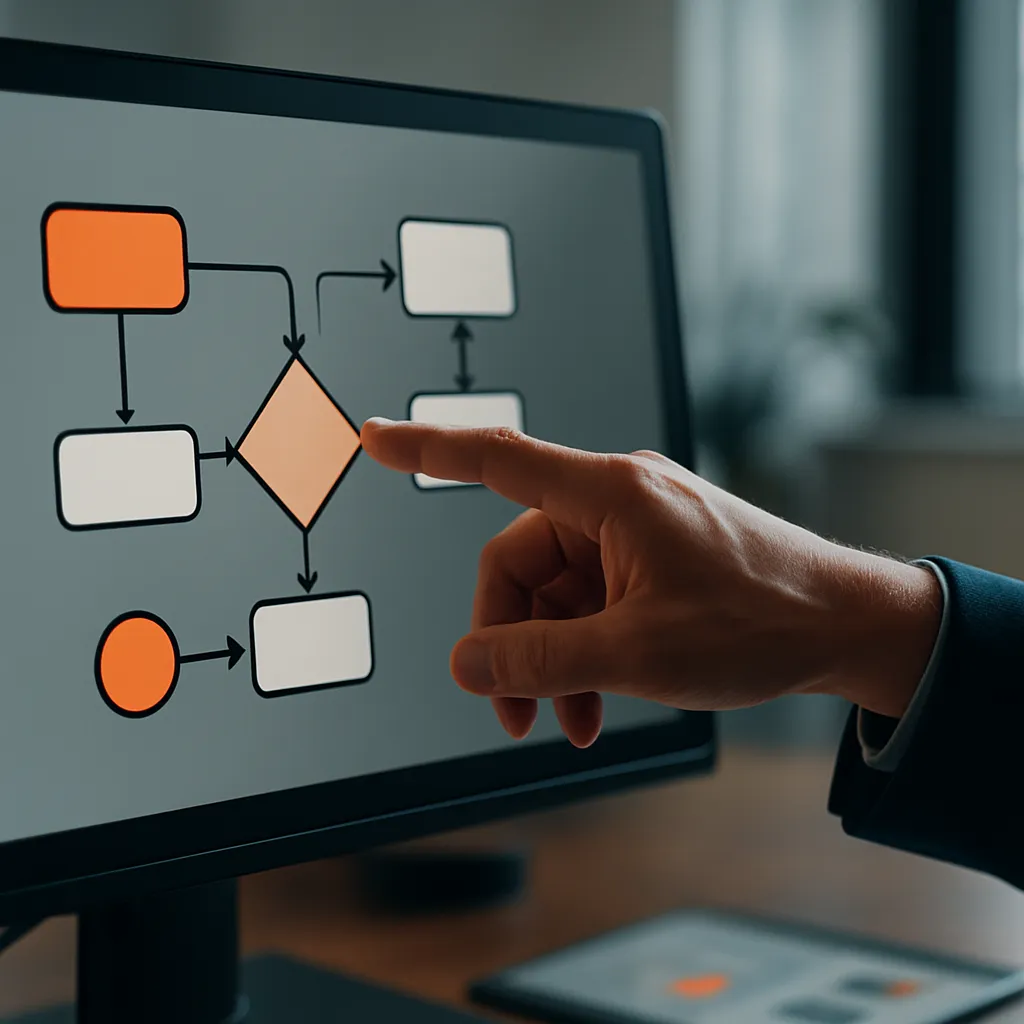
Salesforce workflow automation can reduce repetitive work and improve consistency when business processes, triggers, rules, and expected actions are clearly defined.

Lead Routing
Lead-routing workflows can assign activities according to defined business rules, helping appropriate users receive relevant information and follow-up responsibilities.

Task Creation
Salesforce can create tasks from defined business triggers, reducing repetitive manual entry while keeping activities connected with relevant workflows.

Approval Workflows
Approval automation can route requests through defined decision points, users, conditions, and notifications while maintaining consistent process structures.

Customer Notifications
Relevant customer or internal notifications can trigger when defined Salesforce events require communication, follow-up, or process progression.
Case Management
Automation can support case routing, assignments, updates, notifications, and follow-ups based on defined customer service requirements.

Data Updates
Defined workflow conditions can trigger appropriate data updates, reducing repetitive manual actions while supporting process consistency.

Follow-Up Processes
Salesforce automation can support structured follow-up activities where customer or operational processes require clearly defined next steps.

Internal Alerts
Internal alerts can notify relevant teams when approvals, cases, requests, data conditions, or workflow events require attention.
Where appropriate, external applications or AI capabilities can extend workflows requiring additional contextual processing.
Data Migration
Salesforce Data Migration & Management
Salesforce data migration is more than transferring records; it requires understanding source data, business requirements, relationships, quality, and the intended Salesforce environment.
Legacy CRM Systems
Legacy CRM migrations may require data assessment, field mapping, transformation, validation, and reconciliation before teams rely on migrated Salesforce information.
Spreadsheets
Spreadsheet data may require cleansing, duplicate management, structural mapping, and validation before becoming part of a Salesforce environment.
Custom Databases
Custom databases can contain specialised structures requiring careful assessment and transformation before relevant information is migrated into Salesforce.
Enterprise Applications
Data from enterprise applications may require mapping and transformation so information aligns appropriately with Salesforce structures and business requirements.
Disconnected Data Sources
Multiple data sources can create duplicate, inconsistent, or incomplete records, making consolidation and validation important before migration.
Data Quality Assessment
Data quality reviews can identify inconsistencies, duplicates, missing information, and structural issues that may affect migration and future workflows.
Field Mapping
Field mapping connects existing data structures with Salesforce requirements so migrated information reaches the appropriate destination and context.
Data Transformation
Transformation may be necessary when source structures, formats, values, or relationships differ from the intended Salesforce environment.
Validation and Reconciliation
Validation and reconciliation help compare migrated information with approved source data and identify issues requiring post-migration review.
Business Functions
Salesforce Solutions for Sales, Service & Operations
Salesforce can support different business functions by connecting operational challenges with relevant workflows, customer information, automation, and business processes.


Sales Operations
Lead management, opportunity workflows, activity tracking, forecasting support, and customer information access can be structured around defined sales processes.

Customer Service
Case management, request routing, customer communication, service workflows, and knowledge access can connect customer-facing activities with structured service operations.

Business Operations
Approval workflows, internal requests, process tracking, notifications, and data visibility can support coordinated internal operations across relevant teams.

Marketing & Customer Engagement
Customer data connectivity, campaign workflows, lead handoffs, and customer journey processes can connect marketing activities with broader customer operations.
Industries
Salesforce Solutions by Industry
Salesforce solutions should reflect the specific processes, customer journeys, integrations, service requirements, and operational realities of each industry.

Financial Services
Financial services organisations may require Salesforce workflows around complex customer journeys, compliance-driven processes, service operations, partner management, and connected financial systems.

Healthcare
Healthcare environments can involve complex customer journeys, service operations, compliance-driven workflows, and multiple systems requiring carefully structured information and process connectivity.

Technology & SaaS
Technology and SaaS organisations may need scalable customer workflows, sales processes, service operations, partner management, and integrations across evolving digital environments.

Retail & E-commerce
Retail and ecommerce businesses may need connected customer information, sales processes, service workflows, order-related operations, and integrations across customer-facing platforms.

Manufacturing
Manufacturing organisations can require Salesforce workflows supporting customer operations, partner processes, sales activities, service requirements, and connected enterprise systems.

Professional Services
Professional services organisations can use Salesforce around customer relationships, sales processes, service workflows, internal requests, approvals, and information shared across delivery teams.

Real Estate
Real estate organisations may require Salesforce workflows connecting customer journeys, lead management, sales activities, partner processes, and information across business systems.

Insurance
Insurance environments can involve structured customer journeys, compliance-driven processes, service operations, partner interactions, and data requirements across connected enterprise applications.
AI & Business Apps
Salesforce Integration With AI & Business Applications
Salesforce can connect with AI and external applications where intelligent processing, business logic, or additional data capabilities provide practical value within defined workflows.

AI-Powered Applications
AI-powered applications can connect with Salesforce when business processes require additional processing, recommendations, contextual information, or specialised capabilities supported through AI Software Development Services.
AI Agents
AI agents can participate in defined Salesforce workflows where their capabilities support practical business tasks, contextual processing, and appropriate actions through relevant AI Development Services.
Business Intelligence Tools
Business intelligence tools can connect with Salesforce data to support reporting, analysis, and operational visibility across broader business environments.
Customer Support Platforms
Customer support platforms can integrate with Salesforce to connect customer information, service requests, communications, cases, and relevant workflows.
Internal Knowledge Systems
Internal knowledge systems can connect with Salesforce where users need organisational information alongside customer or operational workflows.
Custom Software
Custom software can extend Salesforce when specialised business processes require applications, functionality, or data capabilities beyond standard configuration.
APIs and Data Services
APIs and data services can connect Salesforce with external applications, enabling information exchange and workflows across the wider technology environment.
AI should extend specific workflows where it creates practical value rather than becoming a requirement for every Salesforce implementation.
Architecture
Salesforce Solution Architecture
Your Salesforce environment should operate as part of a connected business ecosystem, not as an isolated CRM platform separated from users, applications, data, and workflows.
Users & Business Teams
Users and business teams interact with Salesforce through experiences designed around their roles, responsibilities, workflows, information requirements, and access permissions.
Salesforce Platform
The Salesforce platform provides the central environment where relevant configuration, customer information, workflows, business processes, and connected capabilities operate.
Custom Development
Custom development extends Salesforce where specialised functionality, application behaviour, data processing, or user experiences require additional engineering.
Workflow Automation
Workflow automation connects business triggers, rules, system actions, user activities, approvals, notifications, and other defined operational requirements.
Reporting
Reporting connects relevant Salesforce information with business requirements so teams can access operational visibility appropriate to their responsibilities.
Integration Layer / APIs
An integration layer or APIs connect Salesforce with external business systems, applications, data platforms, and specialised services.
External Business Systems
ERP, marketing tools, internal applications, data platforms, and AI systems can participate in connected workflows through appropriate integration approaches.
Security & Permissions
Access controls, permissions, authentication, API management, and governance considerations help determine who can access Salesforce capabilities and connected systems.
Monitoring
Monitoring considerations help teams understand system behaviour, integration activity, workflow performance, and operational requirements as the environment evolves.
Security & Governance
Security, Access & Salesforce Governance
Salesforce governance should reflect your data sensitivity, user roles, integrations, business processes, and organisational requirements rather than relying on one universal model.
Role-Based Access
Role-based access helps align Salesforce information and functionality with responsibilities, organisational structures, and relevant business processes.
User Permissions
User permissions determine which Salesforce capabilities and information are available according to individual responsibilities and operational requirements.
Data Access Controls
Data access controls help organisations structure access to relevant customer, operational, and business information within defined requirements.
Authentication
Authentication requirements should be considered as part of the broader Salesforce access model and systems connected to the environment.
Integration Security
Connected systems require appropriate security considerations so data exchanges, APIs, applications, and workflows operate within organisational requirements.
API Access Management
API access should be structured around authorised systems, users, integrations, and data requirements to support controlled system connectivity.
Change Management
Salesforce changes should be considered within business processes, users, integrations, workflows, and governance requirements before deployment.
Audit and Monitoring
Audit and monitoring considerations can help organisations review relevant activities, changes, access, integrations, and operational behaviour.
Data Governance
Data governance should address ownership, access, quality, processes, usage, and organisational requirements surrounding Salesforce information.
Our Process
Our Salesforce Delivery Process
Our Salesforce delivery process connects discovery, strategy, architecture, development, integration, testing, deployment, adoption, and optimisation around your actual business requirements.
Discovery & Assessment
We understand business objectives, users, current systems, processes, Salesforce requirements, data needs, and operational challenges before defining the appropriate solution.
Solution Strategy
We define implementation, customisation, integration, automation, and data requirements according to business priorities and the intended operating environment.
Architecture & Design
We establish solution architecture, workflows, data models, user experiences, integration approaches, access requirements, and relevant technical considerations.
Configuration & Development
We configure Salesforce and develop required custom functionality according to approved business processes, user requirements, workflows, and technical needs.
Integration & Migration
We connect relevant business systems and migrate approved data through appropriate mapping, transformation, validation, and integration approaches.
Testing & Validation
We test workflows, functionality, integrations, data, and user requirements to identify issues before the Salesforce environment moves into deployment.
Deployment & Adoption
We deploy the approved solution and support the transition toward the new or improved Salesforce environment and associated business workflows.
Optimisation & Support
We continue addressing evolving business requirements, operational needs, adoption considerations, and performance-related improvements after deployment.
What Sets Our Approach Apart
Why Choose Wildnet Edge for Salesforce Solutions?
We combine Salesforce expertise with custom software engineering, API integration, and AI capabilities to design solutions around your processes, systems, users, and growth.

Salesforce Consulting & Strategy
We understand business goals, assess existing processes, and develop Salesforce strategies that align platform capabilities with practical operational requirements and future priorities.

Business Process Understanding
We examine how teams actually work, identifying process gaps, dependencies, manual activities, and opportunities where Salesforce can create more connected and efficient operations.

API & Enterprise Integration
We connect Salesforce with enterprise applications, APIs, cloud platforms, and business systems to support reliable data exchange and connected workflows.

Workflow Automation
We identify repetitive activities and apply Salesforce automation across routing, approvals, notifications, updates, follow-ups, and other defined business processes.

Custom Software Engineering
We bring broader software engineering capabilities to Salesforce projects, supporting custom applications, backend functionality, integrations, and business-specific technology requirements.
AI Integration Capabilities
We connect Salesforce with AI applications, AI agents, APIs, and business applications where intelligent capabilities can support workflows, insights, or operational processes.

Scalable Solution Architecture
We design Salesforce environments with future requirements in mind, considering users, integrations, workflows, data, applications, and changing business processes.
Data Migration Support
We support data assessment, cleansing, mapping, transformation, migration, validation, and reconciliation when moving information into Salesforce from existing systems.

Security & Governance Considerations
We consider permissions, access controls, authentication, API access, data governance, change management, audit requirements, and monitoring throughout the solution design.

Ongoing Optimisation
We continue reviewing Salesforce workflows, integrations, configurations, and evolving requirements to identify opportunities for improvement as business needs change.
Flexible Engagement Models
We support consulting engagements, project-based Salesforce delivery, and ongoing support models based on the scope, requirements, and evolving needs of your business.
Cost & Timeline
Salesforce Implementation Cost & Timeline
Salesforce implementation cost and timeline depend on the complexity of your processes, systems, data, users, customisation, integrations, automation, security, governance, and support requirements.
Cost Factors
Cost Factors
Number of Business Processes
More business processes can require additional discovery, configuration, workflow design, testing, deployment, and coordination across relevant teams.
Customisation Requirements
Specialised objects, workflows, approvals, routing, notifications, experiences, and data structures can increase the overall Salesforce solution scope.
Custom Development
Custom applications, backend logic, specialised functionality, portals, and advanced data workflows can require additional engineering effort.
System Integrations
Connecting ERP, marketing, finance, service, ecommerce, internal applications, data platforms, and APIs can significantly influence project scope.
Data Migration Complexity
Multiple data sources, inconsistent structures, duplicates, transformations, validation, and reconciliation requirements can increase migration effort.
Number of Users
User numbers can influence role design, permissions, experiences, readiness activities, testing, deployment, and adoption requirements.
Workflow Automation
Complex automation involving triggers, rules, approvals, notifications, or connected systems can affect implementation scope.
Security & Governance
Access controls, authentication, API management, governance, audit, and monitoring requirements can add planning and implementation considerations.
Ongoing Support
Support and optimisation requirements should be considered when evaluating the longer-term Salesforce operating model.
Timeline Factors
Discovery, requirements, solution design, configuration, custom development, integration complexity, data preparation, testing, deployment, and user adoption can all influence delivery timelines.
A basic Salesforce implementation can differ significantly from an enterprise solution involving multiple systems, data sources, integrations, workflows, specialised development, and governance requirements.
In Their Words
Rated 4.89 across 104 reviews
Quotes are from engineering and product leaders, the people who own the outcome.

“Partnering with Wildnet Edge was a game-changer for our department. Their deep understanding of government processes, combined with cutting-edge AI capabilities, helped us modernize outdated systems with minimal disruption. The result? A faster, smarter, and more transparent public service delivery model.”

“Wildnet Edge truly exceeded our expectations. Their AI-first approach helped us streamline product development and automate key workflows, allowing our team to focus on innovation. Their proactive collaboration and agile execution felt like having a tech co-founder on our side.”

“Working with Wildnet Edge was transformative. They brought deep expertise in AI, cloud, and agile delivery that enabled us to modernize legacy systems without disruption. Their ability to deliver complex solutions at scale made them an essential partner in our digital evolution.”
Straight answers
The questions you were going to ask on the call.
Clear expectations make better partnerships. Here is where the conversation starts.
What are Salesforce solutions?
Salesforce solutions combine consulting, customisation, development, integration, automation, and data services to align Salesforce with your business processes.
What Salesforce services does Wildnet Edge provide?
Wildnet Edge provides Salesforce consulting, implementation, customisation, development, integration, workflow automation, data migration, optimisation, and ongoing support.
Can Salesforce be customised for my business processes?
Yes. Salesforce can be customised with tailored objects, workflows, business rules, automation, and functionality around your specific business processes.
Can Salesforce integrate with my existing software?
Yes. Salesforce can integrate with ERP, marketing, finance, e-commerce, customer service systems, internal applications, cloud platforms, and third-party APIs.
Can Salesforce automate business workflows?
Yes. Salesforce can automate lead routing, approvals, task creation, notifications, case management, data updates, and repetitive business processes.
Can Salesforce be integrated with AI applications?
Yes. Salesforce can connect with AI applications, AI agents, business intelligence tools, custom software, APIs, and other business applications.
Do you provide ongoing Salesforce support and optimisation?
Yes. Ongoing support helps optimise Salesforce, improve workflows, maintain integrations, address evolving requirements, and support continued business growth.
Contact Us
Let’s Build for Outcome
Let’s co-create solutions that deliver measurable impact.
Get started
The Technology Edge Your Business Deserves.
A working session, not a pitch. 30 minutes session on solving your problem.
Prefer to just pick a time? Book a 30-minute roadmap call